
Technology with purpose: the leap from excel to autonomy at Fondo Lunaria
- 18 hours ago
- 3 min read
Can a digital tool strengthen a political mission? For Fondo Lunaria, a feminist fund based in Colombia, the answer is yes. Their digital transformation was not just a software upgrade, but a strategic decision to reclaim time for what truly matters: grassroots accompaniment on the ground.
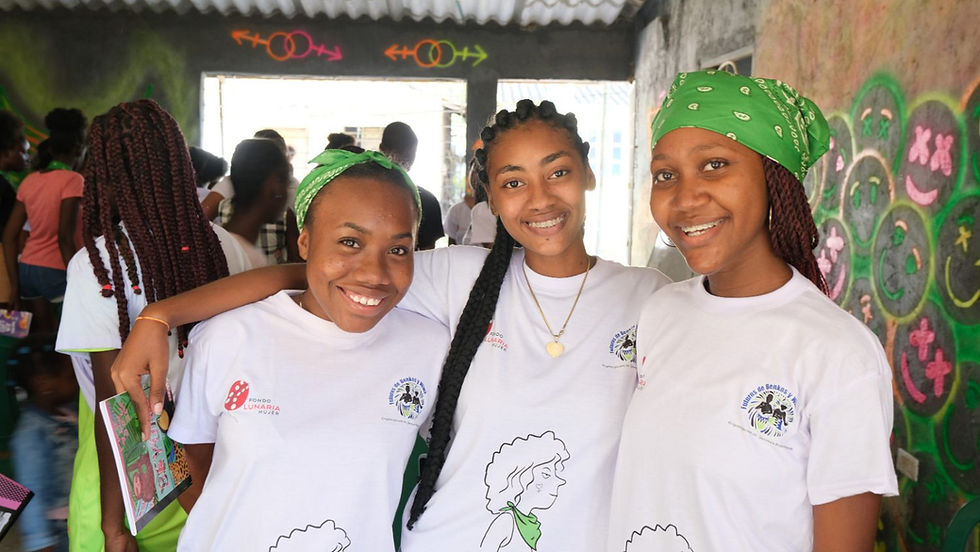
Fondo Lunaria is a Colombian feminist fund that mobilizes resources to strengthen collective processes for diverse young women and trans individuals. They currently support over 340 feminist organizations across Colombia—a beautiful yet complex task that has grown exponentially since 2011, when they supported only six.
Previously, each call for proposals required two to three weeks of manual labor just to build the necessary spreadsheets. These weeks of manual data entry were error-prone and added zero value to the fund's actual mission. Beneath that symptom lay a deeper issue: whenever a new team member onboarded, there was no baseline knowledge. The institutional history of each supported organization lived solely in the memory of long-standing staff members.
"We had a mountain of siloed information scattered across multiple teams and inside people's heads," says Diana López, Co-Director of the Fund.
Fondo Lunaria had already attempted to implement digital platforms in the past. In their own words, it had gone "worse than bad." The differentiator this time was not the tool itself, but what happened beforehand: understanding their core requirements before selecting a solution.
When Fondo Lunaria decided to partner with Wingu, the guiding question from day one was not "What software will we use?" but rather, "What do we need to accomplish that we currently cannot?"
The answer was clear: to have a 360-degree view of each supported organization's history, accessible to the entire team, not just those who had accumulated that knowledge over time.
This required deploying a CRM (Customer Relationship Management, or in their context, a Constituent Relationship Management system) to centralize all data into a single source of truth. Wingu implemented Salesforce, fully tailoring it to Lunaria's specific terminology and workflows, rather than forcing the organization to adapt to the software. Technology should never be foreign to an organization’s daily operations.
Do not automate what needs to stay human
At Fondo Lunaria, the proposal review process is deeply human. The entire team reviews every proposal, taking turns and gathering around a table with their laptops to evaluate them collectively. There are no automated "yes/no" screening filters. Instead, there is human judgment, qualitative discussion, and collective decision-making.
Wingu understood this from the outset. Instead of proposing end-to-end automation, the team reframed the problem: What manual, administrative overhead surrounding this human process can we eliminate?
The solution focused on offloading the operational burden: manual data entry, searching through fragmented information, and cross-checking spreadsheets. All of that was eliminated. The weeks spent building spreadsheets were reduced to a quick review. Consequently, the time available for analysis, active listening, and strategic decision-making multiplied.
The real impact
With the CRM fully deployed, two to three weeks of spreadsheet management were reduced to a single validation step, eliminating administrative bottlenecks.
However, the most significant shift was this: Fondo Lunaria can now measure and analyze its own impact.
Previously, data existed but was siloed across multiple spreadsheets. Today, centralized within the CRM, they can uncover previously invisible patterns: what types of organizations they are supporting, how these groups evolve, and what is actually happening on the ground.
Data that once existed only in staff memories has been transformed into institutional knowledge accessible to everyone. Now, when a new team member joins, the system provides a robust baseline.
"Today, we have more time to think, to conduct critical analysis, and to listen deeply to the collectives," says Diana, "instead of just filling out spreadsheets."

